

On some projects, value engineering can mean “cost-cutting.” In the true sense, value engineering is the best consideration of all the options. Wikipedia defines the Value engineering (VE) objective as “It is a primary tenet of value engineering that basic functions be preserved and not be reduced as a consequence of pursuing value improvements.”
When building healthcare facilities, a challenge emerges: creating high-quality spaces while sticking to a budget. The design of these spaces has a significant impact on patient care. This article discusses how we can balance saving money and ensuring patients get the best care possible. I’ll explore how careful planning, intelligent ideas, and teamwork can help us achieve this balance.
I. Quality Matters for Patients
The quality of healthcare buildings affects patient well-being. These buildings are more than just walls – they affect how patients feel and heal. Studies show how designed spaces can change stress levels, patient recovery, and healing. Good designs help control infections, prevent mistakes, and give patients a positive experience. See my post: How Patient-Centric Design Provides Optimal Care and Patient Experience.
II. Challenges of Cost and Quality:
While we want top-notch quality, we must also deal with limited budgets. Cutting corners without thinking can lead to poor quality and problems later. Using low-quality materials or skipping important parts can put patients at risk, make maintenance costly, and hurt the facility’s reputation. We must remember that saving money now might mean spending more later. Consequently, it is essential to do a life-cycle analysis of capital and operating costs when comparing options.
III. Ways to Balance Quality and Costs:
1. Smart Planning:
Planning is key. Before construction starts, looking at all possible risks and costs is essential. This helps us make informed choices and avoid spending too much. Risk mitigation is necessary in VE. Recent supply chain issues in getting materials timely have led to specifying substitutions. It’s essential to understand the added risk with substitutions.
2. Value Engineering:
Value engineering helps us find ways to save money without losing quality. We can find cheaper options that work well by looking at materials, designs, and systems. This helps us focus on essential things while cutting down on extra expenses.
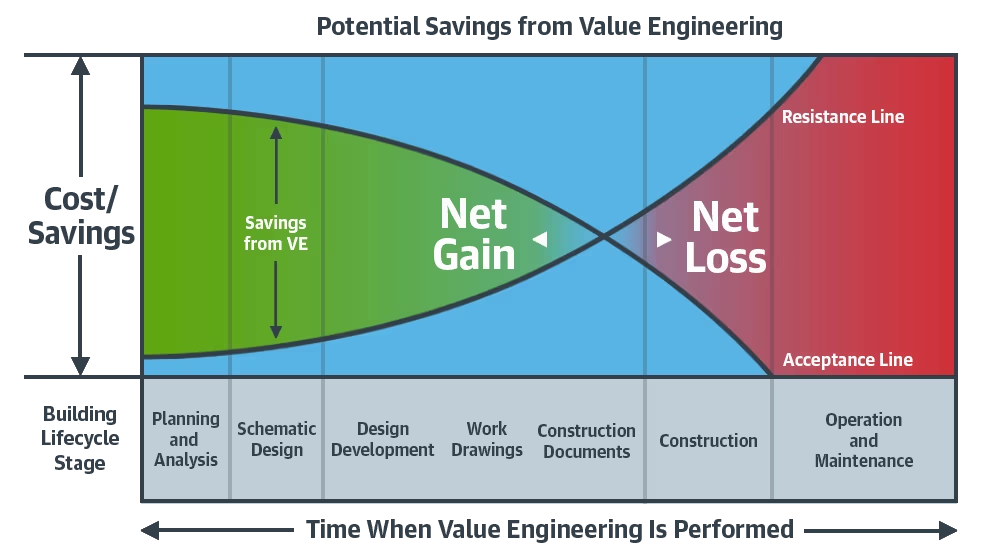
VE must occur earlier in the project. When VE occurs can have a significant impact on savings. The graph below shows that the earlier the VE process is performed, the greater the savings.
3. Choosing What Matters Most:
Not every part of a healthcare building is equally important. We must decide what impacts patient safety, care, and workflows most. This way, we can use our resources where they will make the most difference. A clinician on the team is essential to validate changes impacting patient care.
4. Long-Term Cost Analysis:
Sometimes spending more now can save money later. Using suitable materials and robust designs, we can avoid high maintenance costs and replacements. This helps us save money over time. Life-cycle cost analysis is essential when evaluating alternatives. A cheaper alternative may come with higher operational costs.
5. Collaboration and Innovation:
Working together is critical. We can find creative solutions when architects, contractors, healthcare experts, and administrators share ideas. This helps us make the most of our resources, improve patient care, and make construction smoother.
IV. What Are the Steps in Value Engineering?
Step 1: Gather Information: Conduct functional analysis
Step 2: Creative Thinking: Brainstorm ideas and possible solutions
Step 3: Evaluate Ideas
Step 4: Development: Conduct in-depth analysis of ideas
Step 5: Presentation: Present ideas to key stakeholders
Step 6: Implementation: Put the chosen plan into effect>
V. Future Trends and Considerations:
As healthcare construction evolves, innovative trends shape the industry’s approach to cost-quality balance. Building Information Modeling (BIM) facilitates stakeholder collaboration, enabling more intelligent decisions that enhance construction efficiency and outcomes. Sustainable design practices like LEED certification align with patient-focused design and offer long-term environmental and cost benefits. See my post: Why Sustainability is the Key to Staying Ahead in the Healthcare Industry.
VI. Conclusion:
Finding the right balance between costs and patient care is a big challenge in healthcare construction. Quality and patient care are connected – by planning well, using intelligent ideas, and working together, we can create spaces that help patients heal, stay safe, and feel cared for. Remember, quality isn’t just about spending now – it’s about the good things it brings in the future.
References:
Value Engineering for Construction (https://www.gordian.com/resources/value-engineering-for-construction/)
What are the 6 steps of the Value Engineering Process for OEMs https://www.escatec.com/blog/6-steps-of-value-engineering-process-oems


